Solar on east-west and north-facing roofs
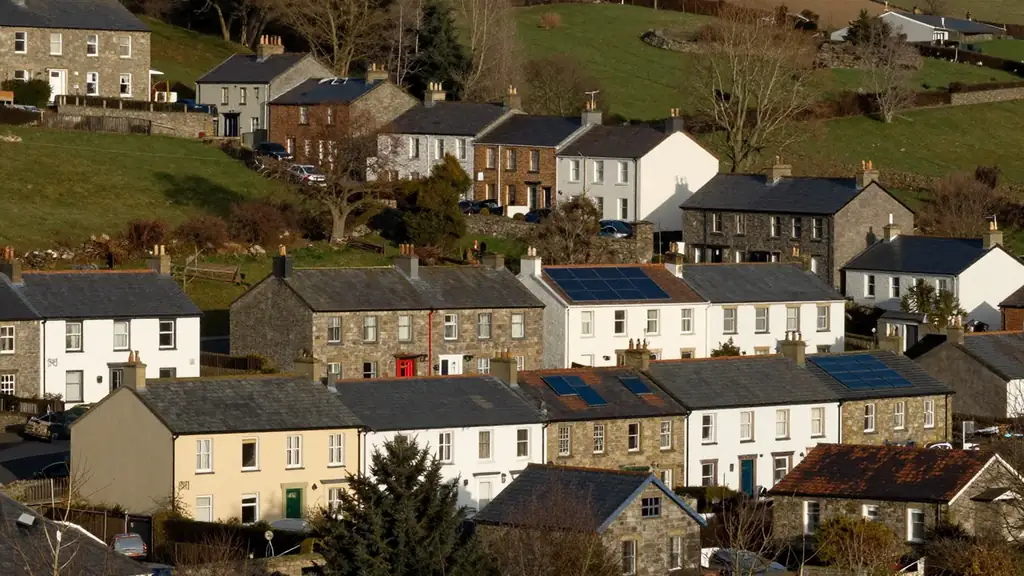
Most Welsh homes do not have a perfect south-facing roof. Many roofs split east and west, and some face north. The good news is that east and west roofs still work well, while north roofs rarely make sense.
This post explains how much output you lose on each face, using official Welsh sunshine data. It also covers pitch, shade and flat roofs, so you can judge a quote with confidence.
How much do you lose on an east or west roof?
East and west faces make about 15 to 20% less electricity than a south-facing roof. The Energy Saving Trust gives that range, and the PVGIS tool agrees. PVGIS puts east and west output at 80 to 82% of south output at Cardiff, Aberystwyth and Bangor.
A south-east or south-west roof loses much less, at about 5%. Therefore a house that faces slightly off south is still a strong candidate. Use the south-facing figure for your area as your starting point, then apply the loss for your direction. Your installer’s estimate should do this sum for you and show it on paper.
Here is an example. A south-facing roof in Rhyl makes about 960 kWh per kWp in a year. An east or west roof in the same place would make roughly 770 to 820 kWh per kWp. That is our own arithmetic on the PVGIS figure and the 15 to 20% loss.
Why an east-west split can suit you
Panels on an east face wake up early and peak in the morning. Panels on a west face peak in the afternoon and evening. As a result, an east-west layout spreads generation across a wider part of the day.
That can match how a family lives. For instance, if you leave for work early and come home at five, a west face meets your evening demand better than a midday peak would. You use more of your own power, and that matters because bought power costs far more than exported power.
Ofgem’s price cap electricity rate from October 2026 is about 26p per kWh. In contrast, Ofgem’s 2024-25 report found an average export rate near 4.4p on untied Smart Export Guarantee tariffs. That compares two Ofgem figures from different periods, but the gap shows why self-use wins. Our post on how many solar panels you need shows how to size a system around your own use.
North-facing roofs: usually not worth it
North-facing roofs make only 53 to 59% of south output in Wales, according to PVGIS. At Cardiff that is about 550 kWh per kWp, at Aberystwyth about 520 and at Bangor about 480. The Energy Saving Trust says it does not recommend panels on a north-facing roof.
For example, 4 kWp on a south roof at Cardiff makes about 4,200 kWh a year. The same 4 kWp on a north roof would make about 2,200 kWh. That is our own arithmetic on the PVGIS figures, but the gap explains why installers steer you away from north.
If your only large roof faces north, look for other space first. A garage, an extension or an outbuilding may face a better way. A ground-mounted array might also work if you have the land, though it needs separate planning checks.
Pitch and shade count too
Direction gets the attention, but pitch and shade also change your yield. At Cardiff, a south roof at 15 degrees gives 976 kWh per kWp and one at 60 degrees gives 993. The best angle of 35 degrees gives 1,042. So a shallow or steep roof costs you only a little.
Shade is a bigger risk. A tree, a chimney or a hillside can cut output sharply. Hills matter in Wales, and PVGIS includes terrain shading in its model. For example, Ebbw Vale shows about 930 kWh per kWp in the same model, which is lower than Pontypridd at about 970, partly because of the surrounding hills.
The MCS design standard requires a written performance estimate that states orientation, inclination and a shade factor. Power optimisers or microinverters can limit the loss when part of an array is shaded. However, they add nothing on an unshaded roof, so you should not pay for them without a reason.
What about slate, flat and awkward roofs?
Roof type affects the fixing method more than the output. Our post on fitting solar panels on a Welsh slate roof explains the extra care that slate needs. Flat roofs have their own planning limits, and panels must sit at least 1 metre from the roof edge and no more than 1 metre above the roof plane.
Sunshine also changes through the year, and Welsh weather plays a part. Read whether solar panels work in Welsh weather for the full picture. Birds can also settle under panels on any roof face, so see our advice on bird-proofing solar panels.
Local examples across Wales
Your roof direction decides output, but your address decides the paperwork. Cadw’s conservation area dataset names three areas for Rhyl, which are Rhyl Central, Rhyl Seabank and Rhyl River Street. It names three for Pontypridd too, and it records two conservation areas in the Blaenau Gwent planning area around Ebbw Vale.
A conservation area does not ban panels. However, a council can remove permitted development rights through an Article 4 direction, so check the planning register before you pick a roof face. If the best face looks onto the street, that check matters most.
Use the local pages for solar panels in Pontypridd, homes around Ebbw Vale and solar installers in Rhyl. They show each area’s council, grid operator and typical output. In hilly places, ask for a shade check on the site visit, since PVGIS finds hill shading in some Welsh towns.
Getting a fair quote for an awkward roof
Ask for an output figure for each roof face, not one total for the whole array. Check that the estimate states the direction, pitch and shade factor. Then compare the cost per kWp and the expected yearly kWh from each installer.
Our solar yield guide for Wales explains each of these inputs. You can then request solar panel installation quotes from MCS-certified installers through the Solar Cymru enquiry form. An honest installer will tell you when a roof face is too poor to use.
Frequently asked questions
Do solar panels work on a north-facing roof?
Is an east-west roof worth it?
Does roof pitch matter as much as direction?
Can a design mix several roof faces?
Ready to compare installer quotes?
Our quote service is free and opt-in. You fill in a short form, and the operator looks for MCS-certified installers near your postcode. Nothing reaches an installer until you ask, so you stay in control.