How many solar panels do I need?
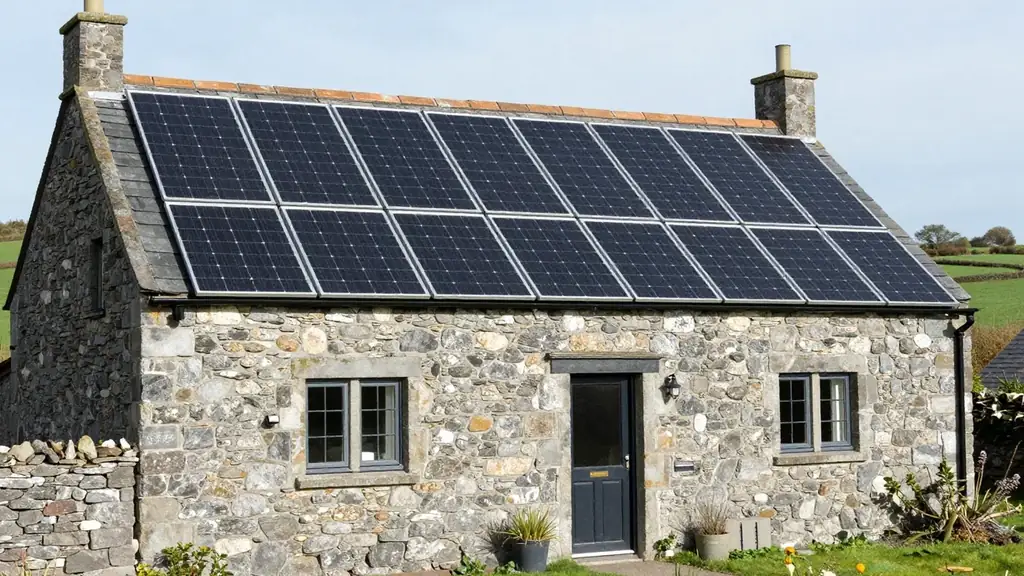
A typical UK home system has about 12 panels. That makes a 4.5 kWp system, and it covers roughly 20 to 30 square metres of roof, according to the Energy Saving Trust. Your own number depends on how much electricity you use, how much roof you have and which way it faces.
This guide shows how to work out a sensible size before you ask for quotes. It uses Welsh sunshine figures and official household usage data, so you can check what an installer tells you.
Start with how much electricity you use
Your bills are the best starting point. Ofgem sets typical household use from July 2026 at 1,600 kWh a year for low use, 2,500 kWh for medium use and 3,800 kWh for high use on a standard meter. A home on a multi-rate meter such as Economy 7 uses more, at 1,900, 3,400 and 6,100 kWh.
Find your own figure on your annual statement, because real homes vary a lot. For example, a family working from home will use more than a couple who are out all day. A larger home with an electric car will sit well above the typical values.
Turn that figure into panels
Installers size systems in kilowatts peak, or kWp. A south-facing roof in Wales makes about 820 to 1,060 kWh a year for each kWp, according to the PVGIS tool from the European Commission. Round numbers help here. At about 1,000 kWh per kWp, a 2.5 kWp system would make the same amount as a medium household uses in a year.
That sum is rough, because the sun does not shine when you cook your tea. As a result, you will still buy some power from the grid even if your panels match your annual use. The reverse is also true, since you will export some power on sunny afternoons.
The 12-panel system from the Energy Saving Trust implies panels of roughly 375 watts each. Panel sizes change, so the number of panels matters less than the total kWp. Always compare quotes by kWp and expected yearly output, not by panel count.
What Welsh sunshine means for your array
Sunshine varies across Wales. PVGIS figures for a south-facing roof at 35 degrees show about 1,040 kWh per kWp in Llanelli, 1,030 in Newport and 960 in Neath. A 4.5 kWp array would therefore make about 4,300 to 4,700 kWh a year across those three places. That is our own arithmetic on the PVGIS figures, so treat it as a guide only.
If you live around Neath, you might need slightly more capacity than a neighbour near the coast to reach the same output. However, the gap is small compared with the effect of your roof direction. Roofs facing east or west make about 15 to 20% less than a south-facing roof, so you may need more panels to compensate. Our post on solar on east-west and north-facing roofs explains the trade-offs.
Shade also matters. A chimney, a tree or a neighbouring building can cut output, and the MCS design standard asks installers to state a shade factor in your estimate. Our solar yield guide for Wales covers shade and pitch in more detail.
Check how much roof you have
Space limits many systems before demand does. Panels need clear roof area, and installers keep gaps around edges, vents and rooflights. Measure your usable south, east and west faces, then ask the installer to show the layout on a plan.
On a flat roof, the Welsh permitted development rules keep panels at least 1 metre from the roof edge. They also limit height to 1 metre above the roof plane. Our planning permission guide sets out the other limits.
If you want to understand the cost side, our post on how much solar panels cost in Wales gives ranges per kilowatt. The 2025-26 official cost data points to roughly £1,400 to £1,950 per kW for small systems. A 4.5 kWp system therefore costs roughly £6,500 to £8,800, and the Energy Saving Trust average of £7,600 sits inside that range.
Should you size up for a battery or an electric car?
A battery lets you store daytime power for the evening, so a bigger array can make sense. Our post asking whether a solar battery is worth it in Wales weighs the costs. Similarly, an electric car adds demand, and you can charge it while the panels generate. Read about charging an electric car with solar before you decide.
Using power yourself is worth more than exporting it. Ofgem’s price cap electricity rate from October 2026 is about 26p per kWh. In contrast, Ofgem’s 2024-25 report found an average Smart Export Guarantee rate near 4.4p on untied tariffs. That is a comparison of two Ofgem figures from different periods, but the gap is large.
Grid limits that affect size
Your inverter rating decides which grid route you follow. A small system with a combined rating of 16 amps per phase or less, which is 3.68 kW on a single-phase supply, follows the simpler G98 route. Larger systems follow G99 and need approval before they switch on.
Note that the limit applies to the inverter, not the panels. Our grid and export guide explains both routes. Ask your installer which route your design needs, because it can affect the timetable.
Ask for a design, not a guess
A good installer will survey your roof and give you a written performance estimate. The MCS standard requires this estimate to state orientation, inclination and shade, and it warns that results can differ if the roof was only assessed remotely. Our solar panel guide for Wales lists what a proper survey covers.
You can start by comparing solar panel installation quotes from MCS-certified installers. Local pages cover solar installers in Llanelli, homes around Neath and solar panels for Newport homes. The Solar Cymru enquiry form passes your details to MCS-certified installers, and you decide whom to talk to.
Frequently asked questions
How many solar panels does a three-bedroom house need?
Is it better to fit more panels than I use?
Do I need planning permission for more panels?
Can I add panels later?
Ready to compare installer quotes?
Our quote service is free and opt-in. You fill in a short form, and the operator looks for MCS-certified installers near your postcode. Nothing reaches an installer until you ask, so you stay in control.