Solar panel maintenance and cleaning in a wet climate
Solar panels need very little upkeep in Wales. Rain washes most dirt away, so a few simple checks each year are enough for most homes. This guide explains what to look at, when cleaning helps, and what to ask your installer to leave behind.
Why rain does most of the work
Panels that tilt at 15 degrees or more clean themselves in the rain. Dust and grime run off the glass with the water. That is good news in a wet part of the world, because Welsh weather helps rather than harms.
Shallower roofs are different, because water runs off slowly and dirt can build up. Dusty sites need more attention for the same reason. For the bigger picture, our post on whether panels work in Welsh weather explains how rain and cloud affect output.
What you should check yourself
The MCS standard for solar sets a maintenance schedule. For the customer, it asks for a few easy checks. For instance, look at the panels from the ground. Look at the inverter display, and check that the system is generating.
Make a note of your yearly output if you can. A sudden drop that weather does not explain is a reason to call your installer, since a fault may be the cause. Our guide to solar yield in Wales helps you judge what output is normal for your area.
Also keep nearby trees trimmed, because branches cast shade and drop leaves. A tree that was small when the panels went on can grow into the roof’s line of sun.
What an installer checks
An installer’s visit goes further than yours. The MCS schedule covers isolators, junction boxes and fuses, as well as the inverter’s ventilation and the connectors. Where the roof is shallow or the area dusty, it also covers cleaning of the modules.
You do not need a visit every year, but a check now and then is sensible. Ask the installer how often it suggests one and what it costs. Because prices vary, get the answer in writing before you agree.
Cleaning panels safely
Cleaning is rarely needed, but it can help in some cases. Ground-mounted panels are easy to reach, although they need more care against rodents and physical damage. Roof panels are harder to reach, so the risks are real.
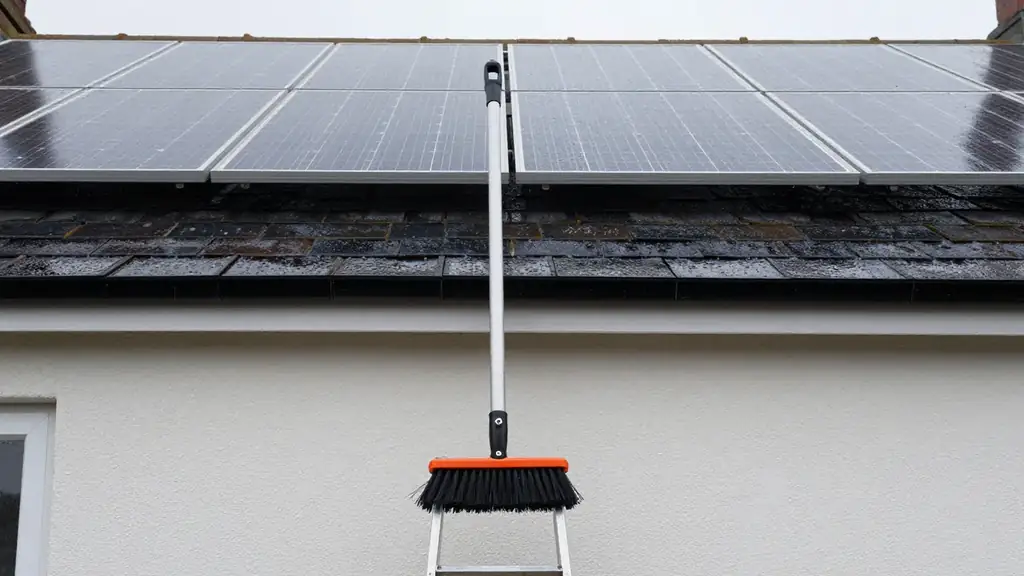
Never climb onto a roof to clean panels. Work from the ground if you can reach them, with clean water and a soft brush. Avoid harsh tools that could scratch the glass.
If you cannot reach safely, hire a professional who works at height. Check first that the cleaner will not void any warranty on your roof or panels.
Birds, moss and lichen
Nesting birds, moss and lichen cause trouble in some places. The MCS standard says the installer must advise on protection from plants and animals, such as lichen, tree sap and nesting birds. Ask what the firm advises for your roof.
The Wildlife and Countryside Act 1981 protects wild birds and their nests in Wales. Netting or mesh to keep birds out is legal in most cases. However, you must never fit it over a nest in use, and you must check it often.
The RSPB says solid metal mesh can be safer than wide nylon netting. Read more in our post on bird-proofing solar panels.
Inverters and warranties
The inverter is the part most likely to need replacing. It usually needs replacing after about 12 years. Inverter warranties start at five years, yet you can extend many of them up to 15 years. A 15-year extension can cost almost as much as a new inverter, so weigh the price before you buy it.
Panels last much longer. The Energy Saving Trust says they should last 25 years or more. Some makers offer performance warranties of 25 to 30 years. Our post on how long solar panels last covers lifespan in detail.
If the roof has a warranty of its own, the installer should ask the provider whether the installation could invalidate it. Keep that reply with your papers.
Paperwork to keep
Good records make maintenance easier, especially if you sell the house later. Ask your installer to leave handover documents, a written maintenance guide and the signs of a fault to watch for. Keep the performance estimate, the commissioning papers and the equipment warranties together.
The redeveloped MCS scheme also requires installers to buy a financial protection product for customers. It gives at least six years of cover from installation. It protects you if the installer goes bust, retires or refuses to fix a fault. Our post on MCS certification explains what this means for you.
Local advice in Swansea, Llanelli and Barry
Coastal and urban sites in south Wales share the same basic care, although exposure may differ. Check your panels from the ground, watch your output and keep trees trimmed. If you want a firm to inspect an older system, compare solar installers serving Swansea.
Homes further west can look at firms around Llanelli. On the Vale of Glamorgan coast, installers covering the Barry area can advise on sea-facing roofs. Salt and wind may matter there, although we do not have Welsh data on how they wear panels.
Getting started
If you do not have panels yet, plan for upkeep when you choose a system. Good advice at the start saves effort later. Ask each installer for the maintenance guide before you sign. Our solar panel installation page explains what a full quote should include.
We are an independent Welsh solar guide and referral service, not an installer. Our form passes your enquiry to MCS-certified installers, and you choose whether to go ahead.
Frequently asked questions
Do solar panels need cleaning in Wales?
How often should I check my system?
When will my inverter need replacing?
Is it safe to clean panels myself?
Ready to compare installer quotes?
Our quote service is free and opt-in. You fill in a short form, and the operator looks for MCS-certified installers near your postcode. Nothing reaches an installer until you ask, so you stay in control.