Solar panels and heat pumps: do they work well together?
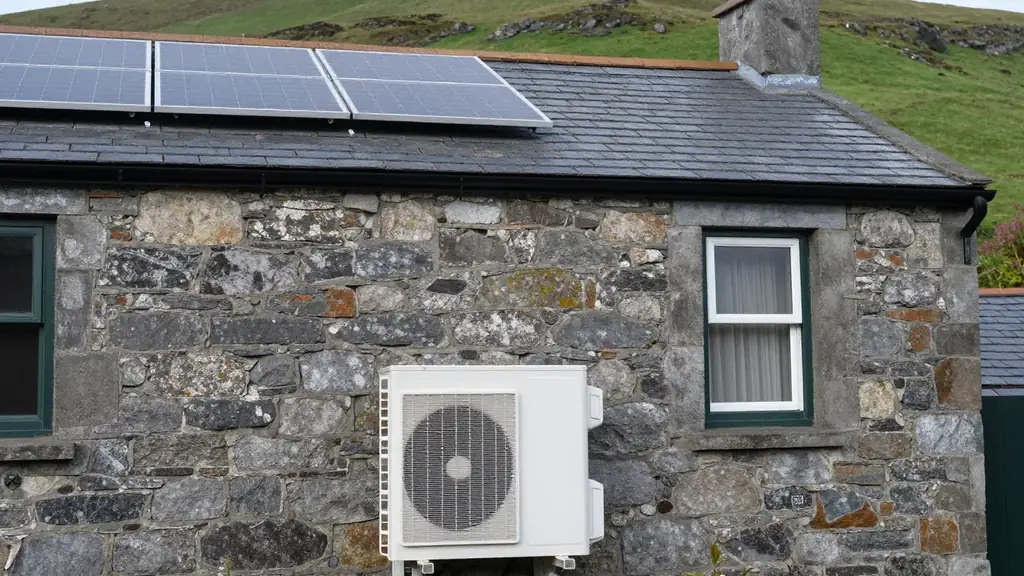
Solar panels and heat pumps can work well together, because the panels make electricity that the heat pump then uses. The catch is timing. Panels make the most power in summer, while a heat pump works hardest in winter. This guide shows what that means for your bills, your costs and your grants in Wales.
Why the two suit each other
A heat pump runs on electricity. If your panels supply some of it, you buy less from the grid. Solar can power a heat pump to lower electricity and heating costs, as the Energy Saving Trust notes.
That makes the pairing attractive to households that want to move away from gas or oil. A heat pump raises your electricity use, so panels have more of your own demand to meet. As a result, a bigger share of your solar power gets used at home, where it is worth more than exporting it.
Ofgem’s price cap from October to December 2026 averages about 26p per kWh for electricity. In contrast, Ofgem’s 2024-25 report found an average export payment near 4.4p on untied tariffs. To see how export payments work, read our post on the Smart Export Guarantee.
The winter problem
Be honest about the mismatch. Winter days are short and the sun sits low, so panels make little power when your heating demand peaks. Solar will not run a heat pump on its own through a Welsh winter.
Even so, the panels still help. They cover some of the load on bright days and in the milder months. Our post on how many panels you need helps you size the array against your total use.
A battery can shift spare daytime power to the evening. Whether it pays depends on your habits. We weigh it up in our guide to solar batteries in Wales. Our solar battery storage page lists the options.
What it costs
An air source heat pump costs around £12,000 to install before grants, according to the Energy Saving Trust. That is one source, so treat it as a guide. Solar panels for a typical home cost roughly £6,500 to £8,800 on top.
Both prices are large, but grants change the picture. The Boiler Upgrade Scheme is open in England and Wales and gives grants through MCS-certified installers. It pays £7,500 for air-to-water, ground source and water source heat pumps. It pays £9,000 for air-to-water or ground source in eligible off-gas-grid homes until 31 March 2027.
The scheme gives £2,500 for air-to-air heat pumps in homes and £5,000 for biomass boilers. Remember that it funds heat pumps and biomass, not solar. Installers apply on your behalf, so ask each one how it handles the claim.
Funding for solar alongside a heat pump
Welsh schemes work differently. Warm Homes Nest can give eligible households a free package of improvements. That package can include a heat pump, insulation and solar panels, although solar is never guaranteed. You must own or privately rent your home and meet the income and EPC rules.
Green Homes Wales, run by the Development Bank of Wales, offers interest-free loans of £1,000 to £25,000 to owner-occupiers. It can fund solar, solar with a battery and heating measures. Funding depends on availability, so check before you plan around it. Our Welsh solar funding guide lists the rules in full.
Do not rely on schemes that exist only in England. Warm Homes: Local Grant, for example, does not apply in Wales.
Planning and grid rules
The Welsh Government changed the permitted development rules for air source heat pumps from 1 June 2026. There are new limits on the number of units and their size. Check them before you fit an outdoor unit, because they differ from the solar rules.
Your grid connection matters too. Small systems of up to 16 amps per phase, or 3.68 kW on a single-phase supply, follow the G98 route. Larger systems follow G99, and batteries count towards the total. A heat pump adds demand, not generation, yet it can affect what size of system you want. Our grid and export guide explains both routes.
How to plan the two together
Think about order. If you are fitting both, ask installers to design them as one plan. Check the roof first, since panels need a sound roof and a clear south, south-east or south-west face.
Next, size the panels against your expected electricity use. Ofgem’s typical household use from July 2026 is 1,600 kWh a year for a low user. It is 2,500 for medium and 3,800 for high, on a standard meter. A heat pump will raise your figure, so ask the installer to model it.
Then plan upkeep. Panels need little care, as our post on solar panel maintenance in a wet climate shows. A heat pump has its own service needs, which the heat pump installer should explain. Charging an electric car adds another load, and we cover that in our post on charging an electric car with solar.
Local advice for Cardiff, Caerphilly and Mold
In the south east, compare solar installers serving Cardiff and firms around Caerphilly. In the north east, see installers near Mold. Ask each one whether it fits both technologies or works with a heat pump specialist.
Check that every installer is certified for the work it does. MCS certifies installers, products and installations for small renewable systems, including solar and heat pumps. Our solar panel installation page explains what to ask.
A fair verdict
Solar and a heat pump are a sensible pair for many Welsh homes, but neither one replaces the other. The panels cut daytime costs and part of your heating bill. The heat pump makes your solar power more useful at home.
We are an independent guide and referral service, not an installer. Our form passes your enquiry to MCS-certified installers, and you choose how far to go.
Frequently asked questions
Can solar panels power a heat pump?
Is there a grant for heat pumps in Wales?
Does a battery help a heat pump?
Do I need planning permission for a heat pump in Wales?
Ready to compare installer quotes?
Our quote service is free and opt-in. You fill in a short form, and the operator looks for MCS-certified installers near your postcode. Nothing reaches an installer until you ask, so you stay in control.