Fitting solar panels on a Welsh slate roof
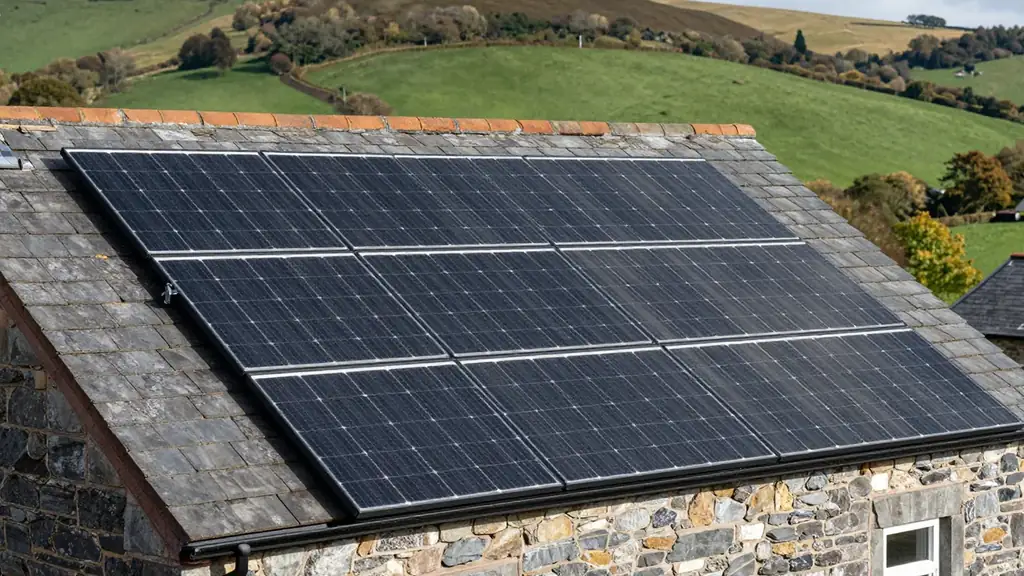
Slate roofs are part of the Welsh landscape. They are also tougher than many people expect, and they can carry solar panels when the fitter takes care. The method matters more than the material, because a careless fix can damage the slates.
This post explains what a good slate installation looks like, which rules apply in Wales and what to ask before you sign. It suits a terrace, a farmhouse or a chapel conversion alike, while the planning section covers the special cases.
Is a slate roof suitable for solar?
A slate roof can be a good home for panels if it is in sound condition. The structure must carry the extra weight, and the slates must stay firmly in place. Building Regulations normally apply when solar goes on a roof. The Welsh Government says installers must check and prove the roof’s ability to carry the load, and some strengthening may be necessary.
Age matters here because battens, nails and rafters wear out. A roof can look sound from the road while the timbers underneath need work. A good installer will inspect the roof space as well as the outside. If the roof needs repairs, do them first.
Ask the installer to photograph the roof space before and after the work. Photos of the battens and fixings give you proof of what was done. As a result, you have evidence if a leak appears later.
How installers fix panels to slate
MCS rules set the standard for fixings. Roof brackets on slate or tiles must not put load on the slates. The exception is a bracket designed to spread the load evenly and certified to MCS 012. The installer must also notch or flash the slates so gaps are no larger than before, and that keeps the rain out.
Manufacturer guidance shows one common method. One mounting-system maker fixes stainless steel slate hooks to the battens, trusses or boards under the slates. Its manual asks for a roof in good condition with enough bearing capacity. It recommends professional slate roofers for the work, and it keeps arrays at least 30 cm from the ridge, gutter and roof edge.
That is a single example, not a market rule. Ask your installer which system they use. Ask who will lift and replace the slates too, because slating is a skill of its own.
Check the roof warranty first
If your roof has a warranty, the installer should ask the warranty provider whether the work could invalidate it. The MCS standard makes this part of the installer’s job. Even so, you should ask for the answer in writing before the work starts.
Keep the paperwork afterwards, since you will want the design, the certificates and the warranty documents if you sell the house or claim on a fault.
Planning rules for slate roofs in Wales
Fitting panels to the roof of a house is in many cases permitted development in Wales. Therefore you often do not need planning permission. Panels may not stand more than 20 cm proud of the roof slope, and they may not rise above the highest part of the roof. A chimney does not count in that measure. The installer must also site them to limit the effect on the building’s appearance.
Heritage rules can change this. A listed building needs planning permission and is likely to need listed building consent. In a conservation area or a World Heritage Site, panels on a wall that fronts a highway need permission. A council can also remove permitted development rights through an Article 4 direction. Our post on solar panels on listed buildings and in conservation areas covers these cases. Our planning permission guide sets out the basic limits.
Slate country: Gwynedd, Anglesey and Powys
North Wales has the strongest link with slate. The Slate Landscape of Northwest Wales World Heritage Site gained its place on the list in 2021. Gwynedd Council leads on it and has joint planning guidance with the Eryri National Park Authority. If you live in Bangor, ask the council early whether your address falls near the site. Our page on solar installers in Bangor has local notes.
Cadw’s dataset records 39 conservation areas in the Gwynedd planning area, and one is named Bangor. On Anglesey, the same dataset names three areas for Holyhead, including Holyhead Beach and Holyhead Mountain Village. Check the details for solar panels in Holyhead if your street is close to any of them.
In mid Wales, Powys has 55 conservation areas in the dataset, and two carry the Newtown name. Because there are so many, anyone living around Newtown should check the council’s planning register for an Article 4 direction before ordering. See our page on solar installers around Newtown for local notes.
What output to expect
Slate does not change the sunshine. For example, PVGIS gives about 1,050 kWh per kWp for a south-facing roof at Holyhead, 950 at Newtown and 810 at Bangor. The Bangor figure is low because PVGIS finds hill shading there, so ask for a site-specific estimate.
Roof direction counts for more than roof material. Our post on solar on east-west and north-facing roofs shows how much you lose on each face. A slate roof that faces south will out-produce a tile roof that faces north.
Questions to ask before you sign
Put these questions to every installer:
- Which fixing system will you use on my slates?
- Who will lift and replace the slates, and do they know slate?
- Will you check my roof warranty and my roof structure?
- Are you MCS certified for this work?
MCS certification is your best protection, and our post on MCS certification and your quote shows why. Birds also nest under panels on any roof, so read about bird-proofing solar panels before the work starts.
When you are ready, you can ask for solar panel installation quotes from MCS-certified installers through the Solar Cymru enquiry form. Tell them your roof is slate in the notes, and they can plan the right fixings. Our guide to choosing an installer in Wales helps you compare what comes back.
Frequently asked questions
Can you put solar panels on a slate roof?
Will solar panels damage my slates?
Do I need planning permission for panels on slate?
Should I repair my roof first?
Ready to compare installer quotes?
Our quote service is free and opt-in. You fill in a short form, and the operator looks for MCS-certified installers near your postcode. Nothing reaches an installer until you ask, so you stay in control.