Charging an electric car with solar panels
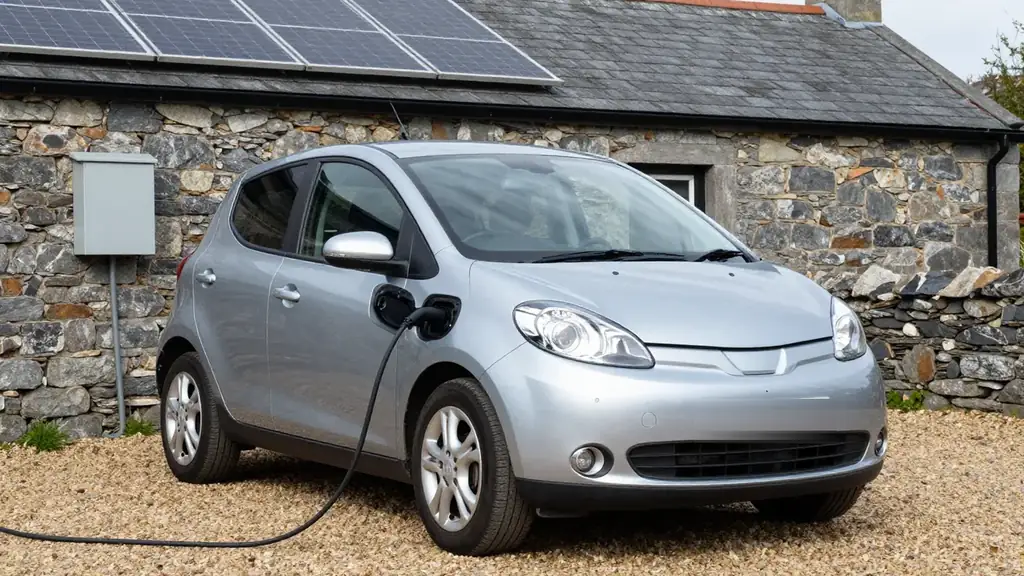
You can charge an electric car with solar panels, and it works best when you charge in the day. The panels feed the car with your own power, which costs less than buying from the grid. The catch is that many drivers charge at night. This guide explains how to match the two in a Welsh home.
Why the pairing makes sense
A car uses a lot of electricity compared with most household appliances. That makes it a good partner for panels, because it can soak up power that you would otherwise export. Exporting pays little, while buying power costs much more.
From October to December 2026, the Ofgem price cap averages about 26p per kWh for electricity. In contrast, Ofgem’s 2024-25 report found an average export rate near 4.4p on untied tariffs. That is a comparison of two Ofgem figures from different periods. It still shows that using solar power at home beats selling it.
The Energy Saving Trust notes that you can charge in the day while the panels generate, which cuts running costs. The saving depends on how often the car is at home in daylight.
Daytime charging at home
The simplest case is a driver who works from home, or who is home in the day. You plug the car in while the sun is up. As a result, much of the charge can come straight from the roof.
Output varies by the weather and the season, though. A south-facing roof at 35 degrees makes about 820 to 1,060 kWh a year per kWp across Wales, depending on place. Summer days give the most, and winter days give far less. Our post on the Smart Export Guarantee explains what you earn for power the car does not use.
If you are out all day, the car is not at home when the panels are working. In that case, solar helps less with the car, and you may rely on evening or night charging instead.
Evening and overnight charging
A battery can bridge the gap. It stores spare daytime solar and releases it when you plug in. Whether that pays depends on the battery price and how much power you would otherwise export. We weigh up the sums in our guide to solar batteries in Wales.
A home battery costs around £5,000 to £8,000 according to the Energy Saving Trust, while Which? gives a spread of under £2,000 to £10,000. A battery fitted with new panels usually costs less. Batteries qualify for 0% VAT until 31 March 2027, after which 5% is due to apply.
Our solar battery storage page explains what to ask installers. Without a battery, a night-time charge uses grid power, so check your tariff for cheaper night rates.
Grants for home chargers
Government help for chargers is now narrow. The Office for Zero Emission Vehicles offers up to £500 for people with private off-street parking who own and live in a flat. The same applies to people who rent and live in any residential property. It also offers up to £500 for households with on-street parking who install a cross-pavement solution. Landlords can claim up to £500 per socket.
These grants end on 31 March 2027. The old home grant for house owners with a driveway has closed to new customers, and the OZEV page says three schemes closed on 31 March 2026. Check the current page before you buy, because rules change.
Sizing your system for a car
A car adds a large new load, so size your solar and battery with it in mind. Ofgem’s typical household use from July 2026 is 1,600 kWh a year for a low user. It is 2,500 for medium and 3,800 for high. Add the car’s likely use on top, and ask the installer to model the total.
Our post on how many panels you need explains the sizing steps. If you also plan a heat pump, read our post on solar panels and heat pumps, because both add demand.
Grid and metering
A charger adds demand, not generation. The solar grid rules still matter for your panels and any battery. Small systems of up to 16 amps per phase, or 3.68 kW on a single-phase supply, follow the G98 route. Larger ones follow G99. Our grid and export guide explains both.
Ask your installer how the whole package fits your supply. If the home has limited capacity, the installer should say so before you buy.
Farms and business drivers
Business and farm users often run vehicles and have large roofs. Charging at a depot or farm yard can use a lot of daytime solar. Business roofs follow different planning rules from homes, and good farmland has extra protection. Our post on solar panels for Welsh farms covers that case.
Local advice for Newport, Cwmbran and Wrexham
South east Wales has several large towns where many commute. If you live there, compare solar installers serving Newport and firms around Cwmbran. In the north east, see installers covering the Wrexham area.
Ask each firm whether it fits chargers or works with an electrician who does. Check that it is MCS certified for the solar and battery work.
A practical plan
First, note when the car is at home and how far you drive in a week. Second, ask installers to model your solar output against that pattern, with and without a battery. Third, compare the extra cost with the likely saving.
We are an independent Welsh solar guide and referral service, not an installer. Our form passes your enquiry to MCS-certified installers, and you decide what to buy.
Frequently asked questions
Can I charge my electric car with solar panels?
Is a battery needed to charge a car with solar?
Is there a grant for a home charger?
Do I need to tell the network operator about a charger?
Ready to compare installer quotes?
Our quote service is free and opt-in. You fill in a short form, and the operator looks for MCS-certified installers near your postcode. Nothing reaches an installer until you ask, so you stay in control.