Solar panels in Wales's national parks
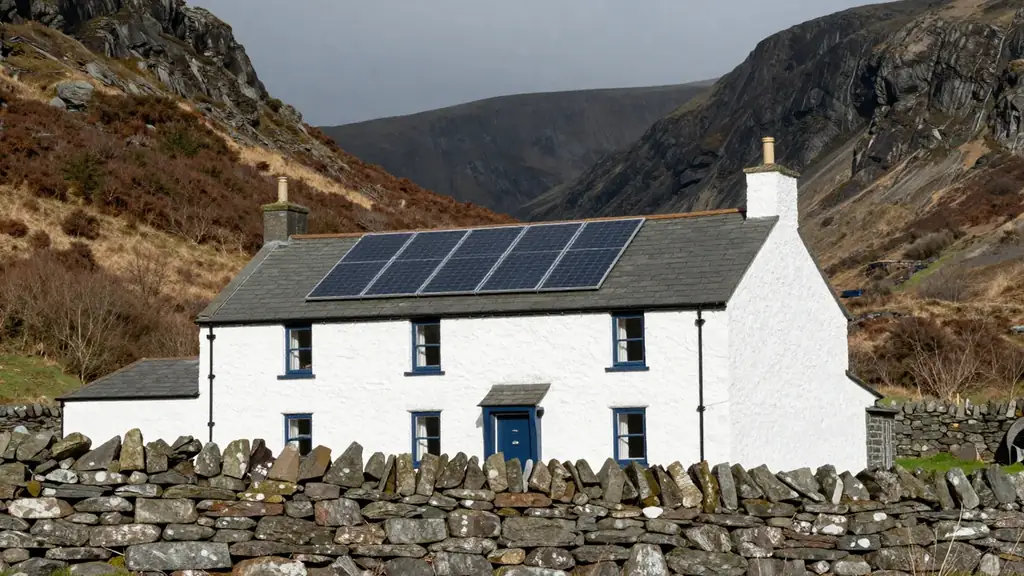
Fitting solar panels on a house in a Welsh national park often needs no planning permission. The Welsh domestic rules name conservation areas and World Heritage Sites, but they do not name national parks. Even so, the park authority plans the land, so ask it before you commit. Business and farm roofs follow different rules.
The three national parks
Wales has three national parks. Bannau Brycheiniog (the Brecon Beacons) covers parts of seven council areas. The Pembrokeshire Coast National Park lies in the south west, while Eryri (Snowdonia) covers parts of Gwynedd and Conwy.
Inside each park, the national park authority is the planning authority, not the council. The council keeps its other services. Pembrokeshire County Council confirms that the park authority plans land inside the Pembrokeshire Coast National Park. Therefore, a quick call to the right body saves time.
We do not know what share of each council area sits inside a park, because no source we checked gives it. Do not assume your street is in or out. Check the park authority’s boundary map, or ask the council.
What the domestic rules say
For a single house, solar on the roof is in many cases permitted development. Panels must not protrude more than 200 mm from the roof slope or wall. They must not stand higher than the highest part of the roof, not counting a chimney. As far as practicable, they must also sit where they least affect the building and the area.
The domestic rules name conservation areas and World Heritage Sites for the extra wall tests. They do not name national parks. The Bannau Brycheiniog authority publishes the same domestic tests in its planning advice note, with no park-specific solar rule. However, that note dates from 2012, so treat it only as a sign that the authority welcomes enquiries.
Our planning permission guide sets out the full list of tests. For the cases where the rules do bite, read our post on solar in listed buildings and conservation areas.
Why you should still ask
A national park often contains conservation areas, listed buildings and special landscapes. Those can change the answer even when the park itself does not. In addition, a council can remove permitted development through an Article 4 direction or a planning condition. If it has, you need a planning application.
Bannau Brycheiniog, Pembrokeshire Coast and Eryri each invite enquiries about land designation. Ask them whether your address has any extra limit. Keep their reply in writing, because it gives your installer a firm starting point.
Farms, businesses and community buildings
Non-domestic rules differ. Solar on a business, farm or community building in Wales is permitted development with no kilowatt cap, as long as the owner meets the conditions. The site must be at least 3 km from an airport. Panels can be no more than 200 mm proud of a wall or pitched roof.
Here the rules do name national parks. On designated land, panels must not go on a wall or roof slope that fronts a highway. Designated land covers national parks, Areas of Outstanding Natural Beauty, conservation areas and World Heritage Sites. Listed buildings and scheduled monuments are out altogether.
Ground-mounted arrays are a different matter. A stand-alone array for a business is permitted development only for the first installation, and it cannot exceed 9 square metres. As a result, a farm-scale array needs a planning application. Our post on ground-mounted solar and planning in Wales explains the thresholds. Our commercial solar page outlines what a business should ask installers.
Landscape, slate and weather
Park landscapes bring practical issues. Many older upland homes have slate roofs, which need careful fixings. MCS says brackets must not load the slates unless the maker designed and certified them for it. Read our post on fitting solar to Welsh slate roofs.
Terrain matters as well, because hills can cast shade across a roof. A south-facing roof at 35 degrees makes about 820 to 1,060 kWh a year per kWp across Wales. Hilly sites sit at the low end, and Bangor scores lowest in the PVGIS model. Our post on how solar copes with Welsh weather covers the numbers.
Bangor, Haverfordwest and Merthyr Tydfil
Each town has its own details. Part of Gwynedd, the council area around Bangor, lies in Eryri, where the park authority is the planning authority. Gwynedd Council also leads the Slate Landscape of Northwest Wales World Heritage Site. If you live near it, ask about extra guidance. See solar installers serving Bangor.
Land inside the Pembrokeshire Coast National Park falls to the park authority, not Pembrokeshire County Council. That is a fact about the county, not about any one street, so check your own address. You can compare firms around Haverfordwest.
Part of the Merthyr Tydfil area lies inside Bannau Brycheiniog. The park authority plans that land, and the council handles the rest. Look at installers near Merthyr Tydfil, and ask which authority covers your home.
Choosing an installer for a park location
Building Regulations apply as well, because they cover the roof’s load and the electrical work. An installer registered with a competent person scheme can self-certify that work and tell the council. Ask which scheme the firm uses, since that tells you who checks the job.
Pick an installer that is MCS certified and has worked in protected landscapes. Ask for a written design and a shade factor. Check how the firm will deal with the planning authority if you need an answer. Our solar panel installation page explains what a full quote includes.
We are an independent Welsh solar guide and referral service, not an installer or a planning body. Our form passes your enquiry to MCS-certified installers. They can confirm the rules for your address before any work starts.
Frequently asked questions
Do I need planning permission for solar in a national park in Wales?
Which authority do I contact?
Are the rules different for farms and businesses?
Does living near a national park change my solar output?
Ready to compare installer quotes?
Our quote service is free and opt-in. You fill in a short form, and the operator looks for MCS-certified installers near your postcode. Nothing reaches an installer until you ask, so you stay in control.