Solar panels on listed buildings and in conservation areas in Wales
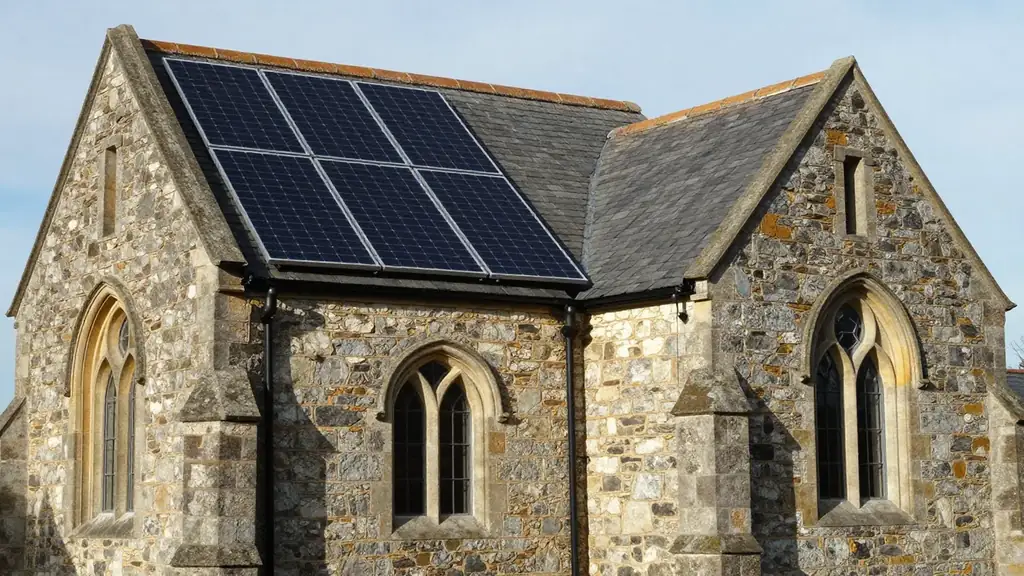
Solar panels on a listed building in Wales need planning permission and are likely to need listed building consent as well. Conservation areas are different. Many homes there can still use permitted development, but some walls and roofs face extra checks. This guide explains how to find out which rules apply to your home before you ask for quotes.
Start with the basics
Fixing panels to the roof of a house in Wales is often permitted development. That means you do not need planning permission, provided you meet the conditions. Panels must not stick out more than 200 mm from the roof slope or wall.
They must not rise above the highest part of the roof, not counting a chimney. They must also sit where they least affect the look of the building and the area, as far as practicable. Because these are legal tests, an installer should check each one in the design.
Those rules come from Welsh planning law. Our planning permission guide covers them in full. However, the rest of this post looks at the exceptions, since protected buildings are where most problems start.
Listed buildings
If your home is listed, permitted development does not apply, and the same goes for a building in the grounds of a listed house. You need planning permission. You are also likely to need listed building consent.
In Wales, works that affect a listed building’s special architectural or historic character need consent in writing. The local planning authority or the Welsh Ministers grants it under the Historic Environment (Wales) Act 2023. Cadw explains the process on its website.
An application can require a heritage impact statement and a certificate of ownership. Older buildings may also need roof structural support for solar. As a result, expect more paperwork than for an ordinary home.
Green Homes Wales loans do not currently support listed homes. Warm Homes Nest may still be an option, although only if your household qualifies. Our funding guide lists the Welsh schemes and who they suit.
Conservation areas
A conservation area does not stop you fitting solar, and panels on a roof are still often permitted development there. The extra rule concerns walls.
You need planning permission for panels on a wall that forms the main or side face of your house and faces a highway. The same applies to a wall of a garden building that faces a highway.
The legal wording says “fronts a highway”, while government guidance says “visible from the highway”. To avoid doubt, treat any wall facing a road as needing a check. Then confirm with the council.
World Heritage Sites follow the same wall rule. Stand-alone panels in the garden have their own limits, too. For instance, a ground array in a conservation area must not sit between the highway and the house.
Article 4 directions and planning conditions
A council can remove permitted development rights through an Article 4 direction, which is common in conservation areas. It can also do it through a condition on the original planning permission. If it has, you need a planning application.
The council’s planning register shows whether this applies to you. A short message to the planning team may answer the question quickly. Ask whether Article 4 or a condition covers your address, and keep the reply in writing.
Scheduled monuments and flats
Panels on a site designated as a scheduled monument are not permitted development. Flats are different again. Permitted development rights apply to houses, so if you live in a flat, ask the local planning authority first. A leaseholder may also need permission from the landlord, freeholder or management company.
How common is this in Wales?
Conservation areas are widespread. Cadw’s dataset on DataMapWales records 27 in the Cardiff planning area. It lists 31 in Monmouthshire and 32 in Flintshire. Those counts cover whole council areas, so they cannot tell you whether your street sits inside one.
Mold has a conservation area named after the town. Abergavenny has two in the dataset, named Abergavenny and Abergavenny Pen-y-Fal. Therefore, check your address with the planning team before you assume anything.
Checking your home, step by step
- Ask the council whether your home is listed, in a conservation area, or covered by Article 4.
- If it is listed, ask about planning permission and listed building consent before you pay for a design.
- If it is in a conservation area, check which walls face the highway.
- Ask whether a condition on the original planning permission removed any rights.
- Keep every reply in writing.
Next, speak to installers who have worked on protected buildings. They can advise on layout, and they should confirm the roof can carry the load. Building Regulations normally cover roof-mounted solar, so the installer must check and prove the roof’s capacity.
Local examples to consider
In Cardiff, with 27 conservation areas, it pays to check early. See solar installers serving Cardiff for a start. Homes in north east Wales can look at firms around Mold.
In Monmouthshire, ask installers near Abergavenny about local rules. Part of Monmouthshire lies in Bannau Brycheiniog National Park, which has its own authority. We explain that in our post on solar panels in Wales’s national parks.
Roof materials and installers
Older protected homes often have slate roofs. Fixings need care because brackets must not load the slates, and MCS has rules on this. Read our post on fitting panels on a Welsh slate roof. Choose an installer that is MCS certified, and see our post on MCS certification for what that means.
Buyers may ask about the panels later, since consents travel with the property. If you plan to sell, see our guide to selling a house with solar panels. Keep every consent and certificate in one folder.
Next steps
Before you commit, ask the council to confirm in writing that your plan meets the tests above. A written reply protects you if a buyer or a neighbour raises the question later. It also gives your installer a clear brief, which helps the design stay within the rules.
You can start with our solar panel installation page for an overview. We are an independent Welsh guide and referral service, not an installer or a council. Our form passes your enquiry to MCS-certified installers, and you decide what to do next.
Frequently asked questions
Can I fit solar panels on a listed building in Wales?
Do conservation areas ban solar panels?
How do I find out if my home is listed?
Can I get a Green Homes Wales loan for a listed home?
Ready to compare installer quotes?
Our quote service is free and opt-in. You fill in a short form, and the operator looks for MCS-certified installers near your postcode. Nothing reaches an installer until you ask, so you stay in control.