The Smart Export Guarantee explained for Welsh homes
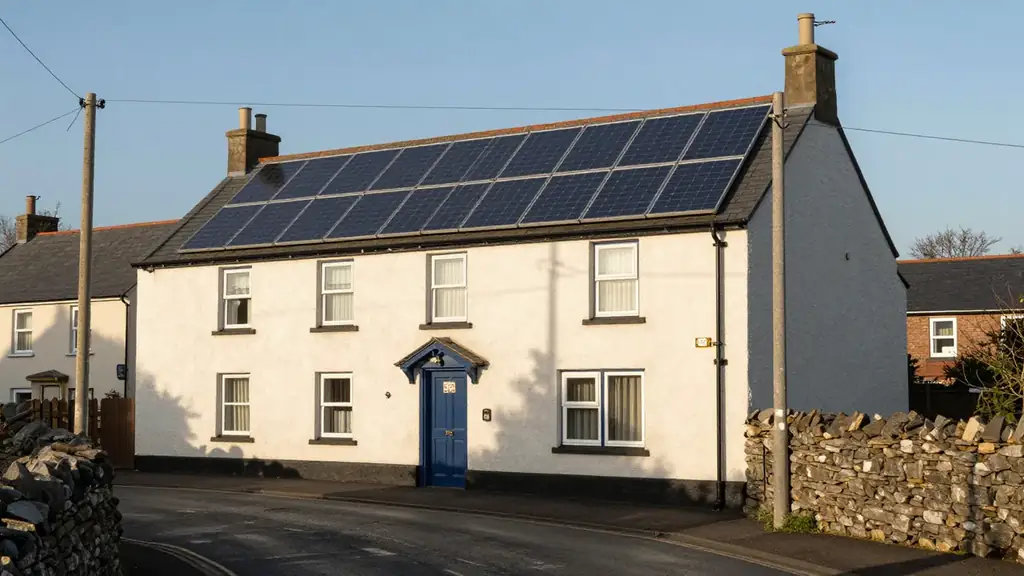
The Smart Export Guarantee, or SEG, pays you for solar power you send to the grid. Suppliers set the rates, so the payment varies a lot between tariffs. You need an MCS-certified system and a meter that records your exports. This guide explains how the scheme works for Welsh homes and how to choose a tariff.
How the scheme works
The SEG began on 1 January 2020. It requires licensed electricity suppliers to pay small-scale generators for low-carbon electricity they export to the grid. Suppliers with at least 150,000 domestic customers must offer at least one SEG tariff. Smaller suppliers can offer one if they choose.
The scheme covers solar installations of up to 5 MW in Great Britain, so any Welsh home is far inside the limit. Wales has no separate version. The same Ofgem rules apply across all of Wales.
Payments rest on export meter readings. You can choose any SEG supplier, not just your current one. Every tariff must pay above zero, but the rate, the contract length and the other terms are up to the supplier.
What you need to qualify
Three things matter. First, the installation and the installer need certification. For solar of 50 kW or less, that means an MCS certificate or another scheme the supplier accepts as equivalent. Ask the supplier what proof it wants before you apply.
Second, you need an export meter and an export MPAN, which is the reference number for your exports. A meter that the supplier can read remotely saves you from sending manual readings. Your installer should explain how the metering works when you sign the contract.
Third, you need a tariff. Many installers will point you to options, although you should compare them yourself. Our grid and export guide covers the metering steps in more detail.
What rates to expect
Rates vary widely because suppliers, not Ofgem, set them. In 2024-25, the scheme’s fifth year, Ofgem counted 50 tariffs from 11 licensees. The average rate was about 4.4p per kWh on untied tariffs, which do not need you to buy other products. The highest untied rate was 12p.
Tied tariffs paid more, at an average of about 14.5p. These bundle the payment with another product, such as a battery or the supplier’s own installation. That higher average is not a free gain, because the bundle may cost more elsewhere. Read the full terms before you commit.
Those figures describe a past year, so they are not today’s rates. Do not assume a “typical 12p”, because that is the highest untied rate, not the average. Compare live tariffs before you apply, and check the contract length so you are not locked into a poor rate.
Why self-use beats exporting
A kilowatt-hour you use at home saves you the price of buying one, so self-use usually wins. From October to December 2026, the Ofgem price cap averages about 26p per kWh for electricity. By comparison, an average untied export rate is about 4.4p. That is our own comparison of two Ofgem figures from different periods.
For this reason, most households gain more by using their solar power than by selling it. Exporting is still worth setting up, since spare power would otherwise earn nothing. A battery shifts more of your solar into the evening, and we weigh it up in our guide to solar batteries.
A heat pump changes the sums as well. If you plan to run one, your own use will rise and your exports will fall. We cover the pairing in our post on solar panels and heat pumps.
Choosing a tariff
Start by listing the tariffs open to new customers. Then compare the rate, the contract length and whether you must buy another product. Look at how the supplier pays, how often, and how it takes meter readings.
A higher rate is not always the best deal. For instance, a tied tariff may need you to take the supplier’s own electricity tariff. In that case, the full bill could cost more than a plain tariff with a lower export rate. Add up the whole picture before you switch.
Review your tariff every year or two. Rates change, so you can gain by moving to another supplier. The Smart Export Guarantee lets you choose, so use that freedom.
Grid notification comes first
Before you export, the network operator needs to know about your system. Small systems follow the G98 route, which covers up to 16 amps per phase, or 3.68 kW on a single-phase supply. The installer sends the paperwork within 28 days of commissioning. Larger systems follow G99 and need agreement first.
Our post on G98 and G99 in Wales explains both routes and who the Welsh network operators are. Check that your installer will handle the notification, since the operator needs to know about your system.
What it means for your payback
Export income is usually a small part of the picture, because bill savings are larger. A system costing roughly £6,500 to £8,800 is mainly paid back by the bills it avoids. Our post on solar panel costs in Wales breaks down the price and the typical saving.
Think of the SEG as a bonus on spare power. It is helpful, yet it should not decide whether you buy panels. A good installer will model your own use rather than lean on export income.
Local advice for Cwmbran, Caerphilly and Swansea
The scheme is the same across Wales, although your installer and network operator may differ. Homes in the south east can compare installers serving Cwmbran and firms around Caerphilly. Further west, look at solar installers around Swansea.
Whichever area you choose, ask each installer how it handles SEG paperwork and whether it supplies the MCS certificate. Our solar panel installation page explains what a full quote includes. If you want a battery too, see solar battery storage.
Funding that affects export income
Some households get their system through a funding scheme. Warm Homes Nest can include solar for eligible low-income homes, and Green Homes Wales offers loans to owner-occupiers. Our Welsh solar funding guide lists the rules. The SEG still applies if the system meets the certification rules.
We are an independent guide and referral service, not an installer or a supplier. Our form passes your enquiry to MCS-certified installers, and you choose whether to go ahead.
Frequently asked questions
What is the Smart Export Guarantee?
Do I have to use my own supplier?
What rate will I get?
What proof do I need?
Ready to compare installer quotes?
Our quote service is free and opt-in. You fill in a short form, and the operator looks for MCS-certified installers near your postcode. Nothing reaches an installer until you ask, so you stay in control.